
The Straightforward Guide to Aggregates for Drainage
Aggregates for drainage come up in nearly every job I’m involved in, from garden fixes right through to bigger construction work where a drainage system actually needs to hold up under daily use. Most people we talk to want one thing… a material that shifts water away properly without blocking, sinking, or turning into sludge after a bit of rain. The good news is that the right aggregate size and stone type can solve most of those headaches.
What makes a reliable drainage aggregate
A drainage aggregate has to keep water moving. That means picking a size and material that forms clear gaps, allowing water to pass through the stone instead of sitting in the soil. Clean, crushed gravel or stone is normally the best option, though pea gravel works well in a few setups, too.
Most jobs fall into the 10mm, 20mm, or 40mm range. Smaller sizes help with pipe bedding because they support the pipe without sharp movement. Larger sizes give fast flow in heavier drainage applications.
I’ve seen projects fail simply because the wrong size was used. The material compacted too tight and stopped water getting through, which turned the whole thing into more of a pond than a drain.
Common aggregates used for drainage in the UK
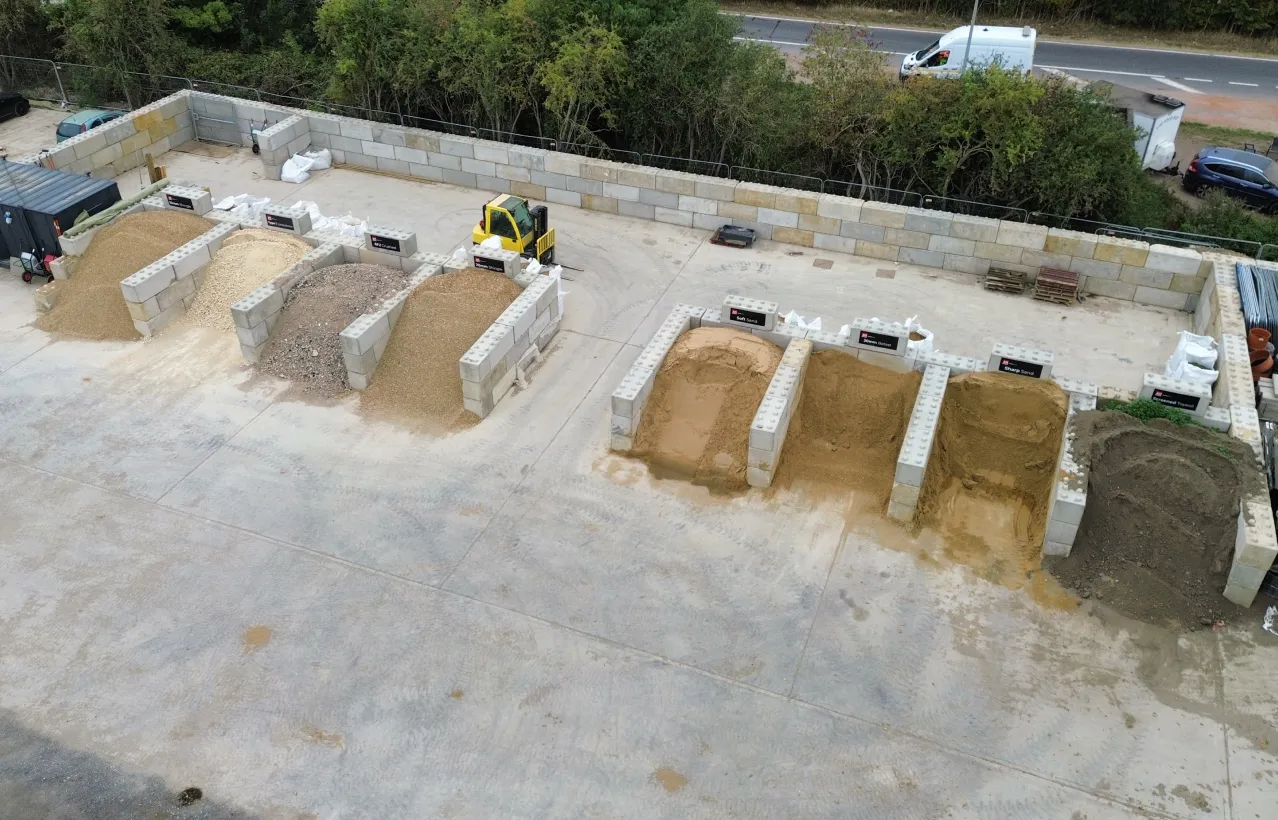
Across Cambridgeshire, the materials that come up most are gravel, stone chippings, and crushed aggregate straight from a reliable quarry.
10mm drainage stone
Great for pipe bedding and tighter spaces where you need a smooth, supportive layer.
20mm gravel
The all-rounder. Garden drains, pathways, small soakaways, and general landscape areas. It gives solid flow without being awkward to handle.
40mm crush
Used where the drainage system needs high flow or in deeper groundwork on a construction project. It doesn’t bind together as much, so water moves through fast.
Pea gravel and decorative aggregates
These are often chosen for landscape areas or visible garden projects. The key is sticking with natural stone so the material stays durable and keeps its drainage properties over time.
Choosing the right type for your project
Every application is slightly different, but these are the ones I tend to see most:
Pipe bedding
10mm or 20mm stone gives a smooth surround while still allowing water to escape.
Garden drains
Natural limestone or granite improves flow in soil that stays wet for too long.
Walkways
Chippings with a smoother surface look tidy and avoid the loose, rolling effect some gravels cause.
Soakaways
40mm stone or a mix recommended for deeper systems to handle the bigger water load.
Whatever the job, all you’re doing is giving water a clear route out. If the material packs down too hard, the drain stops working.
Why a consistent quarry supply matters
A lot of drainage problems start with inconsistent aggregate. If the sizes are all over the place, the gaps between the stones vary and the flow drops. Local quarry material, like the stock we use at A11 Aggregates, keeps the sizing predictable, and that means the drainage behaviour stays predictable too. It cuts down on future maintenance and makes the system more reliable, which most homeowners prefer rather than digging it all up again later.
FAQs
What size aggregate works best for drainage
20mm is the most common choice, though 10mm suits pipe bedding and 40mm works for larger drains and soakaways.
Can decorative gravel be used in drainage
Yes, as long as it’s a natural stone and the pieces are consistent. Pea gravel is a common example.
Is limestone a good material for drainage
Limestone works well in gardens and landscape areas because it’s durable and supports steady water flow.
Do I need a filter membrane around the drainage aggregate
For most projects, yes. A filter stops soil clogging the stone and helps the drain last longer.
Aggregates for drainage are one of the simplest ways to keep water flowing properly in any project, and the right size and stone type make all the difference from day one.